Cause-and-effect approach to turbulence forecasting
Álvaro Martínez-Sánchez and Prof. Adrián Lozano-Durán (Aerofluids, Learning & Discovery Lab) have developed a new way to predict turbulence by focusing on cause and effect, rather than just looking for patterns that happen to appear together. This helps identify which parts of a chaotic flow truly influence what happens next, making predictions more accurate, easier to interpret, and less computationally expensive.
Authors: Álvaro Martínez-Sánchez and Adrián Lozano-Durán
Citation: International Journal of Numerical Methods for Heat & Fluid Flow (March 10, 2026)
Abstract:
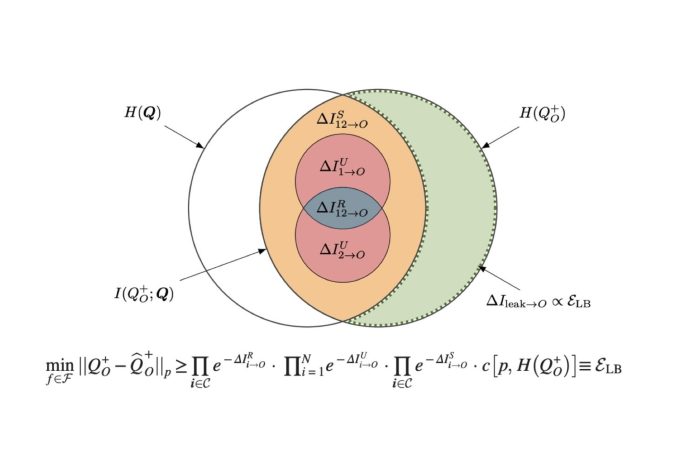
Traditional approaches to turbulence forecasting often rely on correlation-based criteria for input selection. These methods may select variables that correlate with the target without truly driving its dynamics, which limits interpretability, generalization, and efficiency. In this work, we introduce a causality-based approach for input selection in turbulence forecasting based on the Synergistic-Unique-Redundant Decomposition (SURD) of causality. This method decomposes the information from candidate inputs into unique, redundant, and synergistic causal contributions and links them to the fundamental limits of predictive accuracy achievable by any model. In practice, we implement the approach using neural mutual-information estimators and demonstrate its application to wall-shear-stress forecasting from direct numerical simulation data of turbulent channel flow. Our findings show that input variables with strong unique or synergistic causal contributions enable compact forecasting models with high predictive power, whereas redundant variables can be excluded without degrading accuracy. We first validate these capabilities in two benchmark cases involving collider effects, and then apply the methodology to three turbulent flow configurations with different interaction types. In each case, we demonstrate how SURD causalities guide optimal input selection by constructing forecasting models based on various input combinations. We also compare the results with standard space-time correlation analysis and show that SURD provides a more reliable basis for input selection, as it captures nonlinear dependencies, distinguishes redundant, unique, and synergistic interactions, and remains invariant under invertible transformations of the variables. Overall, we believe this enables more interpretable and compact models by reducing input dimensionality without sacrificing performance.